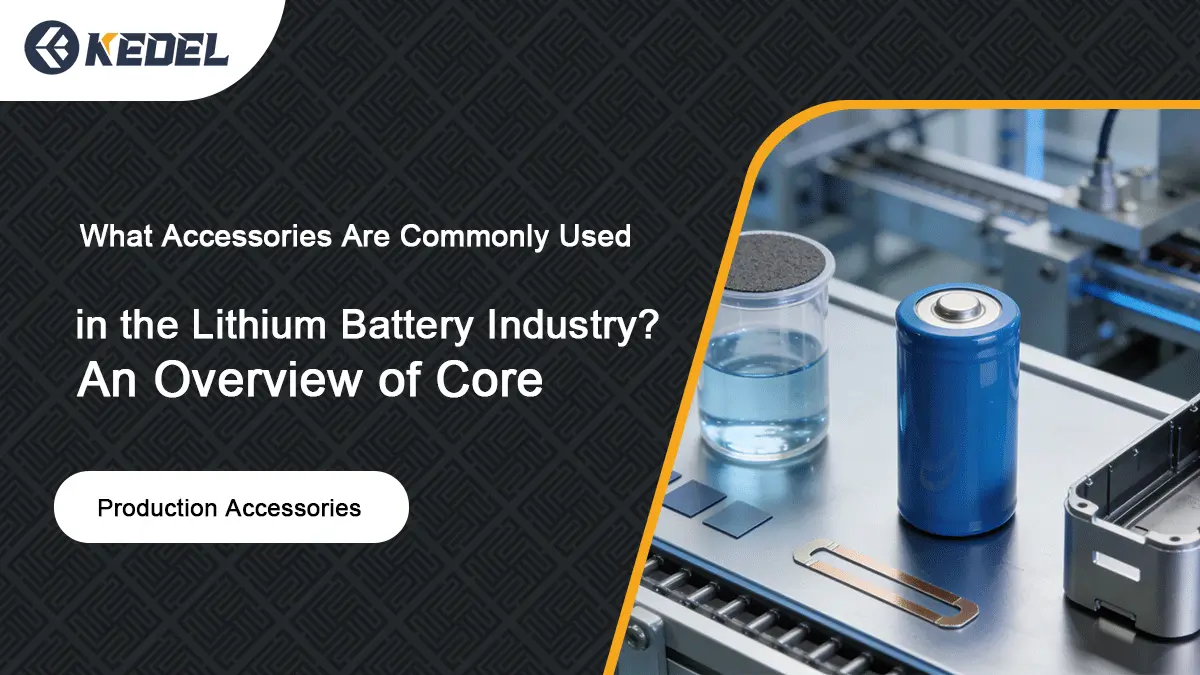
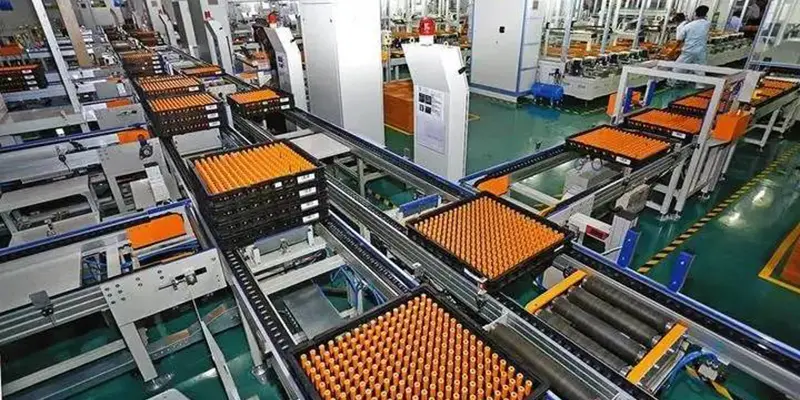
With the rapid development of the global new energy industry, the production scale of lithium batteries has been continuously expanding. Lithium battery manufacturing is an extremely complex and precise process—from the initial preparation and coating of electrode slurry, slitting, to the middle and later stages of winding, lamination, and assembly. Every link is inseparable from high-precision and wear-resistant industrial accessories. The performance of these accessories directly affects the consistency, safety, and production efficiency of batteries. This article will detail the key common accessories in each process of lithium battery production, especially the core components with extremely high requirements for hardness and durability, helping you fully understand the hardware support behind lithium battery manufacturing.
1. Pre-Production Process: Slurry Preparation and Coating Accessories
The first step in lithium battery production is to mix positive and negative active materials into a uniform slurry and evenly coat it on current collectors (aluminum foil or copper foil). The accessories at this stage are mainly responsible for material mixing and thickness control.
- Stirring Paddles and Scrapers: Stirring paddles are used to mix various chemical raw materials uniformly, while scrapers clean the inner wall of the mixing tank to ensure accurate slurry proportions;
- Comma Doctor Blades: The core of the coating machine, used to control the coating thickness of the slurry on the metal foil. Since the slurry contains hard particles, the blades must have extremely high wear resistance to maintain precision for a long time;
- Filter Screens: Used to remove impurities and undispersed particles in the slurry, avoiding protrusions and holes in the coating, and ensuring the flatness of the electrode coating.
2. Middle Production Process: Slitting and Forming Accessories
After the electrode sheets are dried, they need to be cut into strips or single sheets suitable for battery sizes. This step has "micron-level precision requirements" and is also the field where tungsten carbide (cemented carbide) materials are most widely used.
1. Slitting Knives
Used for longitudinal slitting of full rolls of electrode sheets. Lithium battery electrode sheets consist of both metal foil and coating, so the requirements for the knife edge are extremely high—ordinary knives become dull and chipped after cutting a few kilometers. In contrast, tungsten carbide slitting knives can maintain a sharp edge during several kilometers of cutting, resulting in burr-free electrode edges.
2. Cutting Molds and Punches
In the lamination process, electrode sheets need to be punched into specific shapes. High-hardness punching molds can minimize burrs, which are a major cause of battery short circuits. Choosing the right mold directly reduces battery safety risks.
3. Ceramic and Alloy Guide Rollers
During the high-speed transportation of electrode sheets, guide rollers are used to fix and guide the movement. They not only reduce frictional scratches on the electrode sheets but also ensure no deviation during transportation.
3. Assembly Process: Winding, Lamination, and Packaging
After the electrode sheets are prepared, the process moves to cell assembly. The accessories at this stage are mainly responsible for precise grabbing, positioning, and reliable connection.
- Winding Pins: The "core shaft" of automatic winding machines, around which electrode sheets and separators are wound at high speed to form cells. They require an extremely smooth surface (to avoid scratching the separators) and sufficient strength to withstand the stress of long-term high-speed rotation;
- Laminator Nozzles: Grab electrode sheets for stacking using vacuum suction, usually made of anti-static materials to prevent static adsorption of dust and damage to the electrode coating;
- Ultrasonic Welding Horns: Used to weld tabs to electrode sheets. They must withstand high-frequency vibration and continuous pressure while ensuring firm welds that do not detach;
- Electrolyte Injection Needles: Precisely inject electrolyte into cells. They must be resistant to electrolyte corrosion, as corrosion of the needles would contaminate the electrolyte and affect battery performance.
4. Performance Comparison Table of Core Accessories
To help you quickly select accessories, we have compiled the requirements for key station accessories into the following table:
| Production Process | Common Accessory Names | Recommended Main Materials | Key Performance Requirements |
|---|---|---|---|
| Slurry Preparation | Mixing Tank Scrapers | Stainless Steel/Cemented Carbide | Chemical corrosion resistance, wear resistance, no slurry contamination |
| Electrode Slitting | Slitting Knives | Tungsten Carbide (Cemented Carbide) | Long-lasting edge sharpness, ultra-long service life, burr-free cutting |
| Electrode Punching | Punching Molds | Tungsten Carbide/High-Speed Steel | Impact resistance, high hardness, stable dimensional accuracy |
| Cell Winding | Winding Pins | Cemented Carbide/High-Performance Steel | Extremely low surface roughness, bending resistance without deformation |
| Battery Packaging | Sealing Molds | Mold Steel/Ceramics | Good dimensional stability, resistance to repeated extrusion and wear |
5. Why Is Tungsten Carbide So Important in Lithium Battery Accessories?
From the above content, it can be seen that tungsten carbide (Tungsten Carbide) is almost the "standard material" for core lithium battery accessories. This is inseparable from the characteristics of lithium battery production:
- Maximum Wear Resistance: Active materials in electrode slurries, such as lithium iron phosphate and ternary materials, are abrasive. Ordinary metal accessories wear out quickly, while tungsten carbide has dozens of times the wear resistance of ordinary steel;
- Reduce Shutdown Losses: Lithium battery production lines basically operate 24/7. Tungsten carbide accessories have a long service life, which can significantly reduce downtime for accessory replacement and increase production capacity;
- Stable Precision: Tungsten carbide hardly deforms under force, ensuring precise dimensions and neat edges of slit and punched electrode sheets—this is key to improving battery consistency and safety.
6. Conclusion
Accessories in the lithium battery industry cover a full range from basic transportation parts to high-precision cutting tools. For manufacturers, choosing the right accessory materials (such as using tungsten carbide in key parts) is not only to extend accessory life and reduce replacement costs but also to directly improve overall battery quality by reducing burrs and controlling processing precision. With the commercialization of new technologies such as solid-state batteries, the performance requirements for these industrial accessories will continue to increase.