
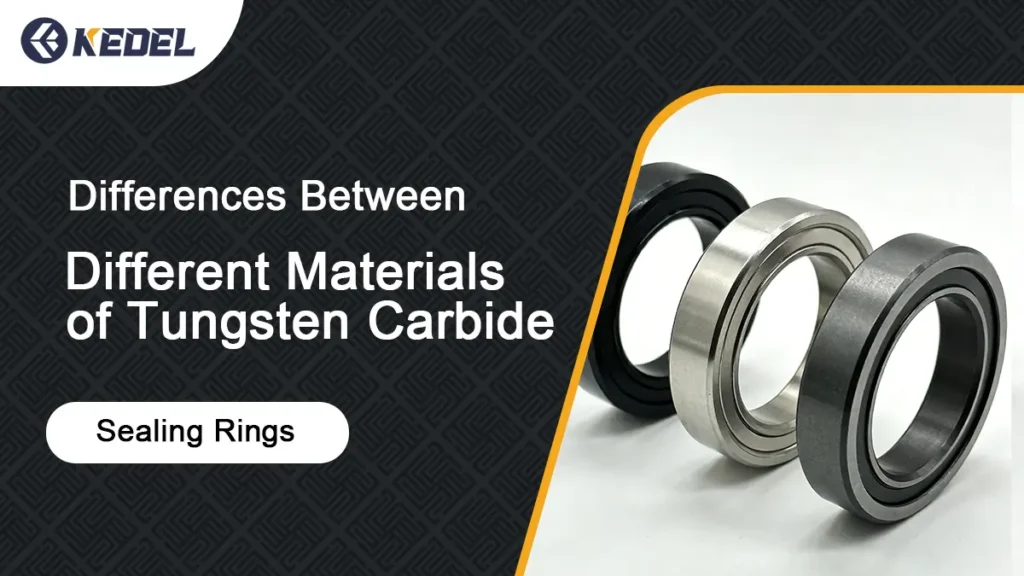
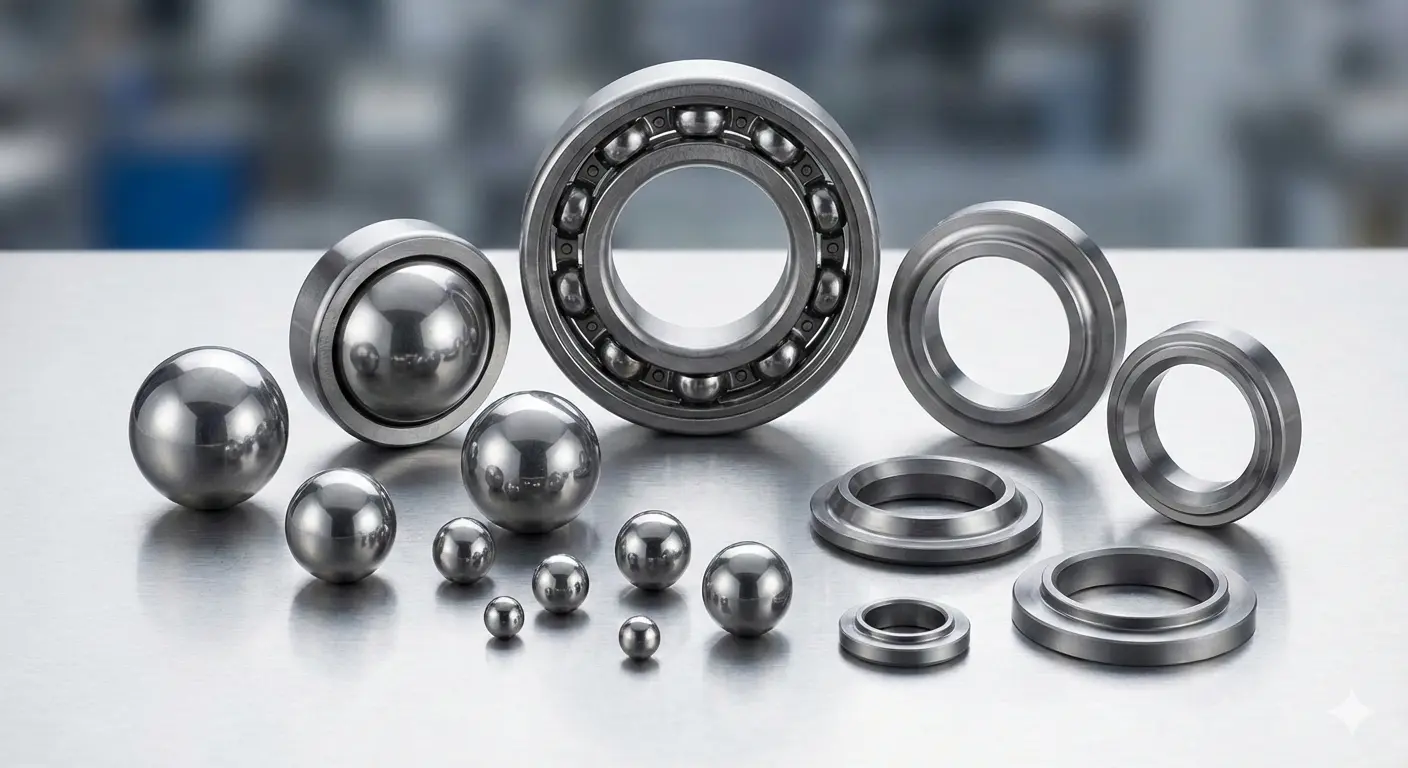
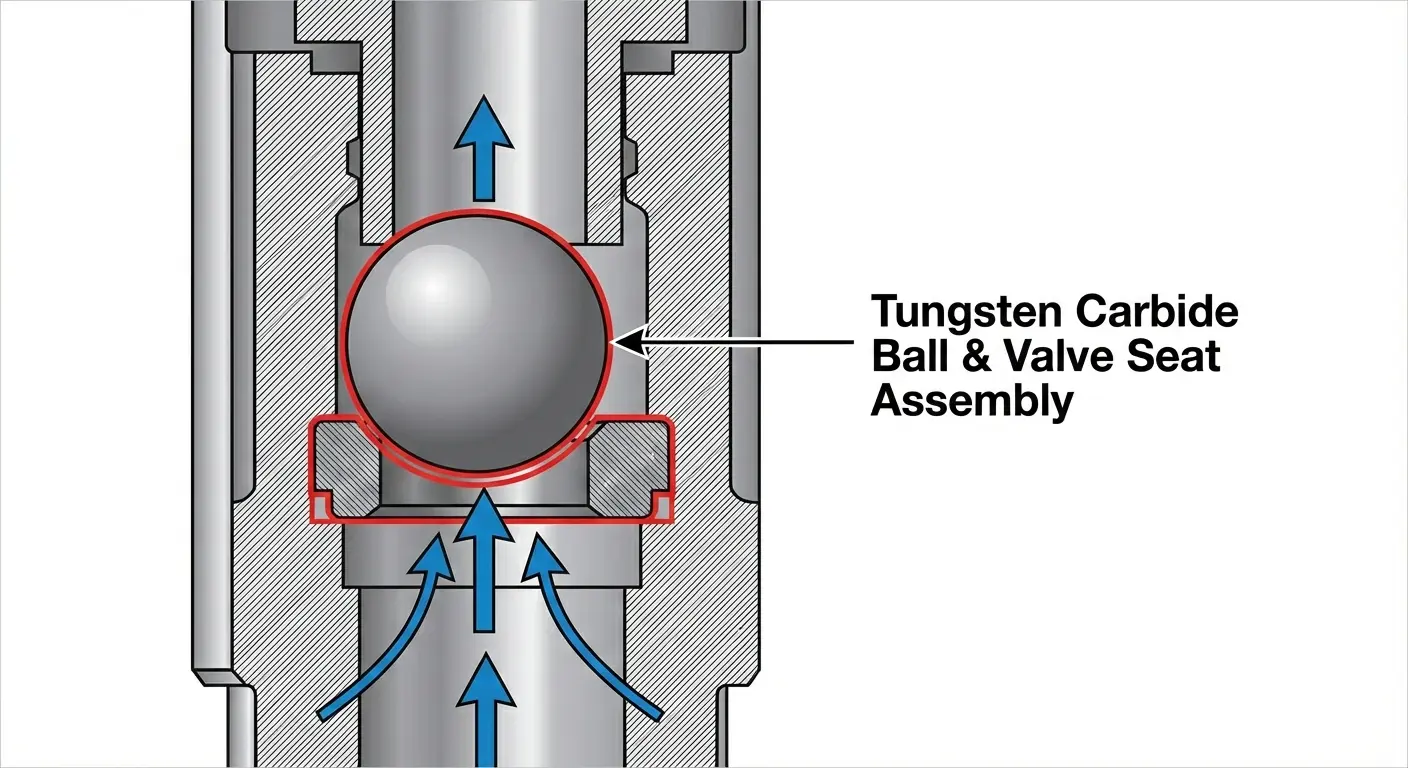
Tungsten carbide sealing rings are core components in industrial sealing systems, widely used in scenarios such as pumps and valves, mechanical seals, water conservancy equipment, and chemical reaction kettles. Their performance directly determines the sealing effect, service life, and operational stability. The core performance of sealing rings depends on the materials used. Currently, the mainstream materials for tungsten carbide sealing rings on the market mainly include YG series tungsten carbide, YN series tungsten carbide, and silicon carbide (SiC). At the same time, different grades of the same material (such as YG8, YG10, YN10, etc.) have significant performance differences due to different component ratios. This article will use easy-to-understand language, combined with lists and tables, to clearly analyze the differences between these materials and grades, helping industry practitioners quickly grasp the core logic of material selection.
1. First, Clarify the Core Comparative Materials: Basic Definitions of YG, YN, and Silicon Carbide
Before understanding the differences, let's first clarify the basic properties of these three core materials to avoid confusion:
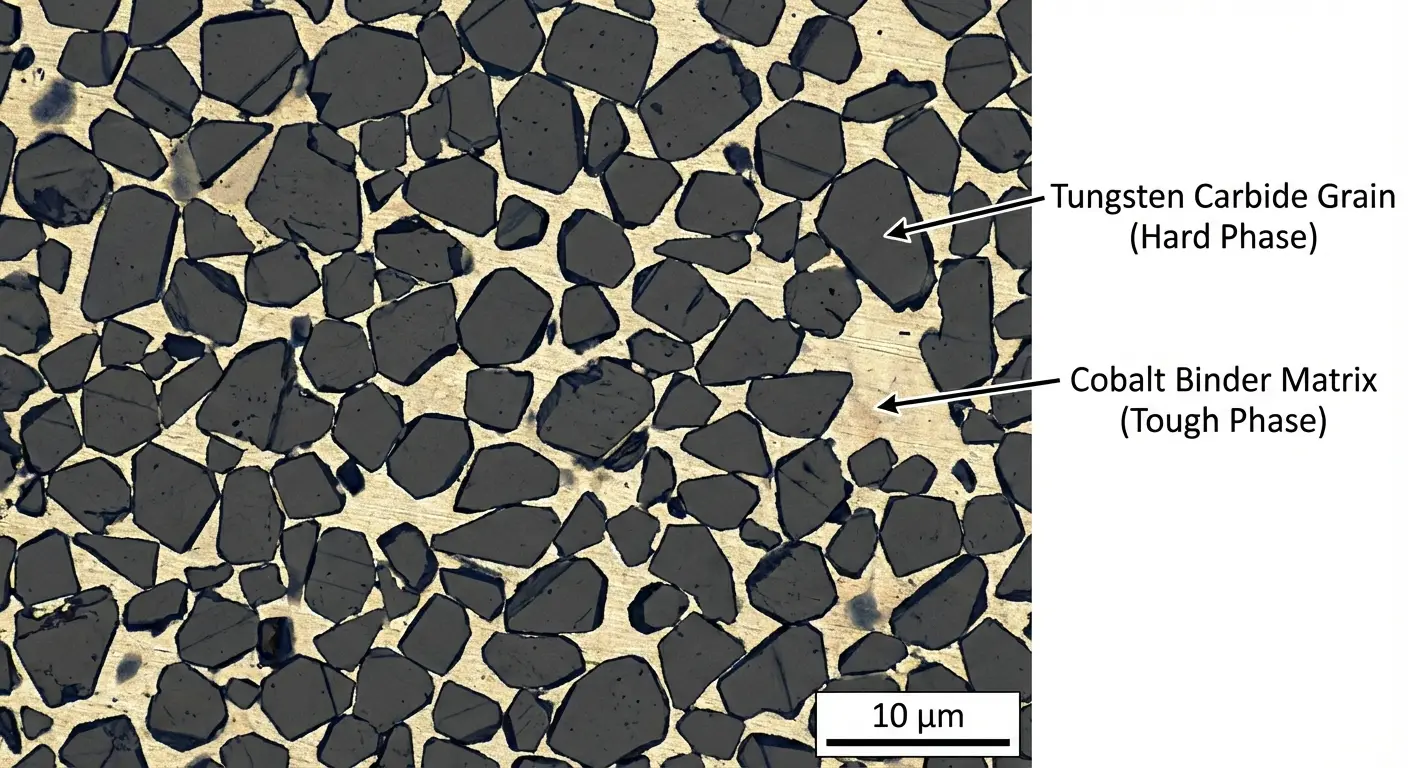
- YG series tungsten carbide: Belongs to tungsten-cobalt hard alloy, with core components of tungsten carbide (WC) and binder cobalt (Co). "YG" is the pinyin abbreviation of "Ying Gu" (hard cobalt). The difference in cobalt content is the key to distinguishing different grades. The higher the cobalt content, the better the toughness of the material, but the hardness and wear resistance will decrease slightly.
- YN series tungsten carbide: Belongs to tungsten-cobalt-nitrogen hard alloy, which is based on the YG series with the addition of nitrides (such as TiN, TaN, etc.). "YN" is the pinyin abbreviation of "Ying Dan" (hard nitrogen). The addition of nitrides is mainly to improve the hardness, high-temperature resistance, and oxidation resistance of the material, making it suitable for more severe high-temperature working conditions.
- Silicon carbide (SiC): Not a tungsten carbide material, but an inorganic non-metallic material. Common types include reaction-sintered silicon carbide (RBSiC) and pressureless-sintered silicon carbide (SSiC). Its biggest characteristics are extremely high temperature resistance and corrosion resistance, and high hardness, but its toughness is relatively weaker than that of tungsten carbide materials.
2. Core Differences: Comprehensive Comparison of YG, YN, and Silicon Carbide Materials
These three materials are the mainstream choices for tungsten carbide sealing rings, with significant differences in applicable scenarios. The following is a detailed comparison from three key dimensions: key performance, applicable working conditions, and advantages/disadvantages, presented more intuitively in the form of a table:
| Comparison Dimension | YG Series Tungsten Carbide | YN Series Tungsten Carbide | Silicon Carbide (SiC) |
|---|---|---|---|
| Core Hardness (HRA) | 89-92 | 91-94 | 92-95 |
| Wear Resistance | Excellent, suitable for medium-low load and conventional wear conditions | Superior, 15%-30% higher than YG series, suitable for high wear conditions | Extremely high, more wear-resistant than tungsten carbide materials, especially suitable for high-speed friction scenarios |
| High-Temperature Resistance | General, long-term service temperature ≤600℃, easy to oxidize when exceeding | Good, long-term service temperature ≤800℃, better oxidation resistance than YG series | Excellent, long-term service temperature up to 1200℃, strong high-temperature stability |
| Corrosion Resistance | Good, resistant to corrosion by conventional media such as acids, alkalis, and salts, but not resistant to strong oxidizing media | Good, slightly better corrosion resistance than YG series, with resistance to some oxidizing media | Extremely strong, resistant to corrosion by most acids, alkalis, salts, and strong oxidizing media, almost not eroded by chemical media |
| Toughness (Impact Resistance) | Good, the best toughness among tungsten carbide materials, can withstand a certain impact load | General, due to the addition of nitrides, toughness is slightly lower than YG series, and impact resistance is slightly weak | Poor, brittle, not resistant to strong impact, easy to crack when impacted |
| Applicable Working Conditions | Sealing scenarios with conventional temperature (≤600℃), medium-low load, and no strong impact, such as ordinary water pump seals and mechanical transmission seals | Sealing scenarios with medium-high temperature (≤800℃), high wear, and slight corrosion, such as high-temperature oil pump seals and chemical intermediate transportation equipment seals | Sealing scenarios with high temperature (≤1200℃), strong corrosion, and high-speed friction, such as strong acid and alkali reaction kettle seals, high-temperature boiler seals, and nuclear power equipment seals |
| Advantages | Good toughness, high cost performance, low processing difficulty, and wide application range | High temperature resistance, excellent wear resistance, strong oxidation resistance, and certain toughness | Extremely strong high temperature resistance, corrosion resistance, and wear resistance, long service life |
| Disadvantages | Limited high-temperature resistance and wear resistance, not suitable for strong corrosion conditions | Slightly poor toughness, 20%-40% higher price than YG series, and slightly higher processing difficulty | Brittle, poor impact resistance, high price (2-3 times that of YG series), and high requirements for processing accuracy |
3. Differences Between Different Grades of the Same Material: Internal Differences of YG Series and YN Series
In addition to the differences between different materials, sealing rings of different grades of the same material also have performance differences due to different component ratios. The core influencing factor is the binder content (cobalt content for YG series, total cobalt + nitride content for YN series). The following explains the differences between mainstream grades of YG series and YN series respectively:
3.1 Differences Between Mainstream Grades of YG Series (Core Difference: Cobalt Content)
The number in the grade of YG series represents the percentage of cobalt content. For example, YG8 means the cobalt content is 8%, and the rest is tungsten carbide. The higher the cobalt content, the better the toughness, but the hardness and wear resistance will decrease slightly, and the price will also increase with the increase of cobalt content.
| Grade | Cobalt Content | Core Performance Characteristics | Applicable Working Conditions |
|---|---|---|---|
| YG6 | 6% | Highest hardness (HRA≥91), best wear resistance, but worst toughness and weak impact resistance | Static sealing scenarios with low impact and high wear, such as fixed sealing rings and low-speed equipment seals |
| YG8 | 8% | The best balance between hardness (HRA≥90) and toughness, the most widely used grade in YG series | Dynamic sealing scenarios with conventional speed and medium-low load, such as ordinary water pumps, fans, and hydraulic equipment seals (mainstream choice in the market) |
| YG10 | 10% | Better toughness than YG8, strong impact resistance, but slightly lower hardness (HRA≥89) and wear resistance | Sealing scenarios with certain impact load and medium-high speed, such as equipment for transporting media containing a small amount of impurities and mining machinery seals |
| YG15 | 15% | Best toughness, extremely strong impact resistance, but lowest hardness (HRA≥88) and wear resistance | Sealing scenarios with high impact and high load, such as large slurry pumps, crushers, and other equipment seals for media containing a lot of impurities |
3.2 Differences Between Mainstream Grades of YN Series (Core Difference: Nitride Content)
The number in the grade of YN series represents the total content of cobalt + nitrides. The addition of nitrides (mainly TiN) is mainly to improve high-temperature resistance and oxidation resistance. Common grades include YN6, YN10, YN12, etc., among which YN10 is the most widely used grade.
| Grade | Total Cobalt + Nitride Content | Core Performance Characteristics | Applicable Working Conditions |
|---|---|---|---|
| YN6 | 6% | High nitride content, highest hardness (HRA≥93), best high-temperature resistance (long-term ≤850℃), but poor toughness | High-temperature, low-impact, high-wear sealing scenarios, such as high-temperature heat transfer oil furnace seals and molten salt transportation equipment seals |
| YN10 | 10% | The best balance between high-temperature resistance (long-term ≤800℃) and toughness, strong oxidation resistance, the mainstream grade of YN series | Medium-high temperature, medium-high wear, slight corrosion sealing scenarios, such as high-temperature chemical pump seals, steam pipeline seals, and hot oil transportation equipment seals |
| YN12 | 12% | Better toughness than YN10, strong impact resistance, slightly lower high-temperature resistance (long-term ≤750℃) | Medium-high temperature, certain impact sealing scenarios, such as high-temperature slurry pump seals, high-temperature fan seals, and other high-temperature equipment seals containing a small amount of impurities |
4. Material Selection Guide: Quickly Match Working Conditions with Materials/Grades
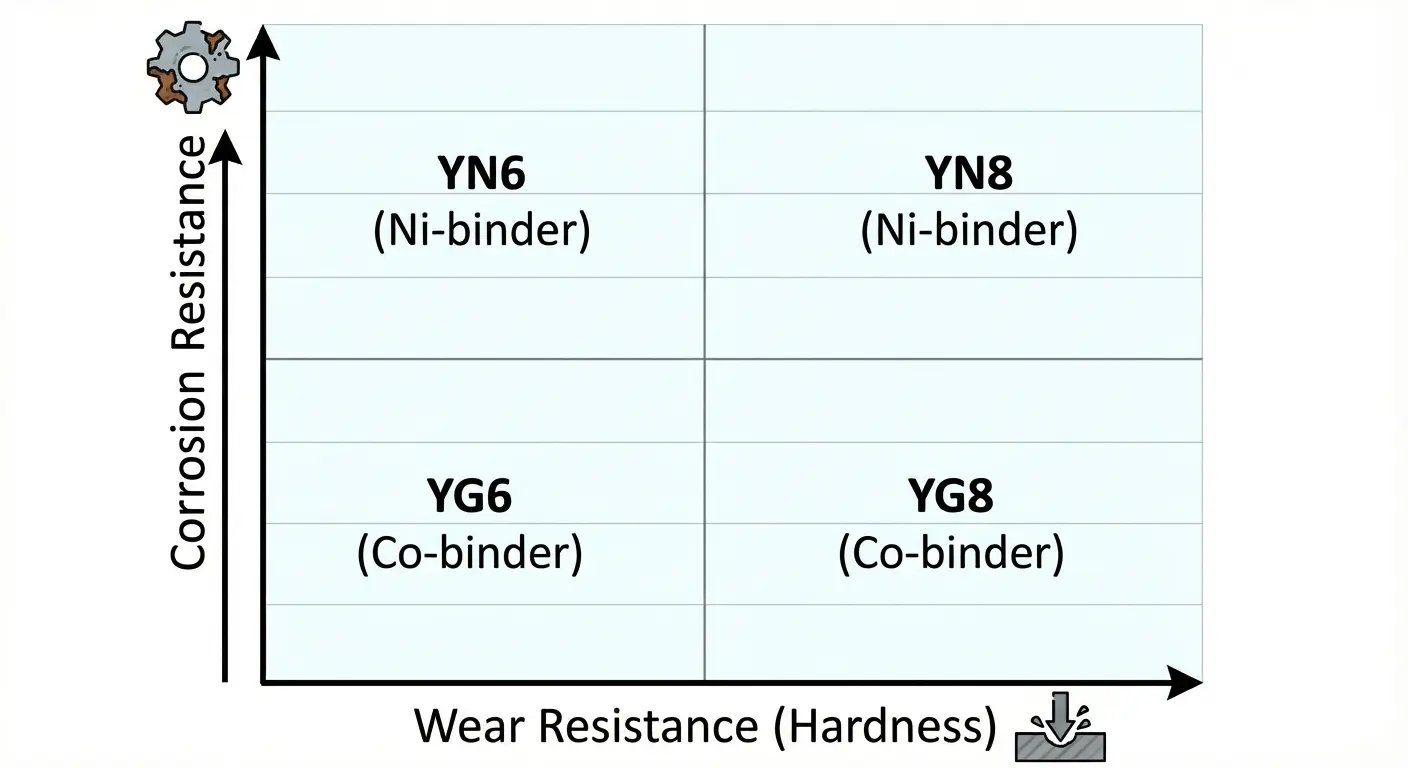
After understanding the differences between different materials and grades, you can quickly select the appropriate tungsten carbide sealing ring according to the working conditions of your equipment. The following is a simple selection logic:
- If the working condition is normal temperature, no corrosion, medium-low load, and no impact: Priority is given to YG8 (highest cost performance, wide application); if the wear is small, YG6 can be selected to improve wear resistance; if there is slight impact, YG10 can be selected.
- If the working condition is medium-high temperature (600-800℃), slight corrosion, and high wear: Priority is given to YN10 (balances high-temperature resistance and toughness); if the temperature is higher (≤850℃) and there is no impact, YN6 is selected; if there is impact, YN12 is selected.
- If the working condition is high temperature (>800℃), strong corrosion (strong acid and alkali), and high-speed friction: Priority is given to silicon carbide (SiC). Attention should be paid to avoiding strong impact on the equipment, and buffer structures should be matched if necessary.
- If the working condition is medium-low temperature with impurities and high impact: Priority is given to YG10 or YG15 (high cobalt content, good toughness), and YN series and silicon carbide with high brittleness should be avoided.
5. Supplementary Notes: Precautions During Use
- Although silicon carbide sealing rings have excellent performance, they should be handled with care during installation to avoid collision, otherwise they are easy to crack; at the same time, the flatness of the sealing surface should be ensured, otherwise the sealing effect will be affected.
- When using YG series sealing rings, if the medium temperature exceeds 600℃, cooling measures should be taken, otherwise the sealing surface will fail due to oxidation.
- It is recommended to select materials with matching performance for the seal pair (rotating ring + stationary ring) of the same equipment, such as YG8 rotating ring matching YG8 stationary ring, or silicon carbide rotating ring matching silicon carbide stationary ring, to avoid rapid wear caused by excessive hardness difference.
- In terms of price: Silicon carbide > YN series > YG series. Among the same materials, grades with high binder content have higher prices. When selecting, comprehensive consideration should be given to working conditions and costs, and higher performance is not necessarily better.
Summary: The Core of Selection is "Working Condition Matching"
The differences between different materials (YG, YN, silicon carbide) and different grades of the same material of tungsten carbide sealing rings are mainly the differences in performance focus——YG series excels in toughness and cost performance, YN series is strong in high-temperature resistance and wear resistance, and silicon carbide is good at high-temperature resistance and corrosion resistance. There is no need to blindly pursue high performance when selecting. The key is to match the corresponding materials and grades according to the working conditions of your equipment, such as temperature, medium corrosion, wear degree, impact load, etc., so as to ensure the sealing effect, control costs, and extend the service life.
As a practitioner in the tungsten carbide industrial products industry, we can customize the appropriate sealing ring material and grade plan for you according to your specific working conditions (such as medium type, temperature, speed, pressure, etc.). If you have specific equipment sealing needs, please feel free to contact us for more accurate selection suggestions!