
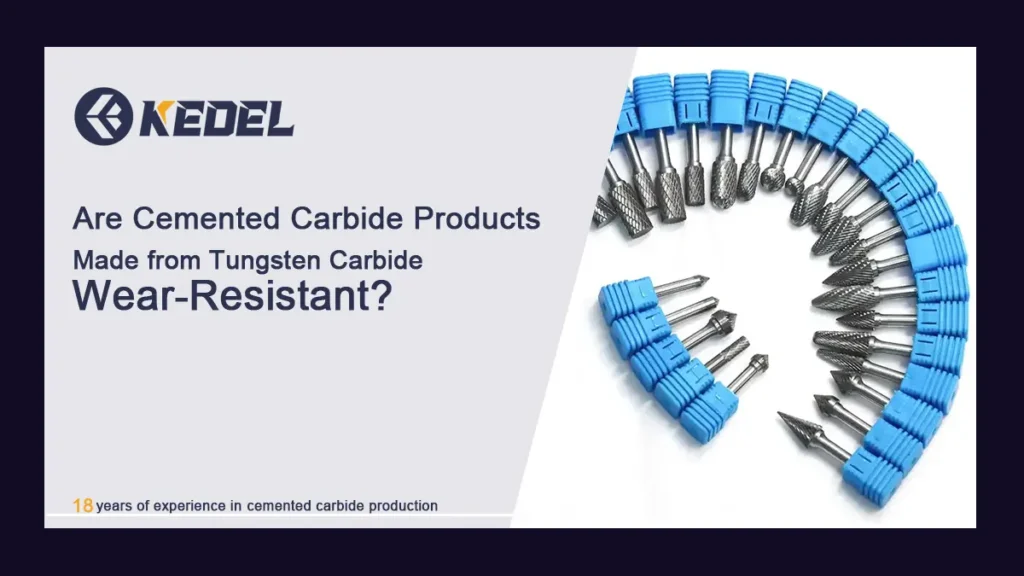
Cemented carbide products with tungsten carbide (WC) as the core raw material are widely recognized as "highly wear-resistant materials" in the industrial sector. Their wear resistance far exceeds that of ordinary steel, cast iron, and even ceramics, allowing them to be used continuously for thousands of hours in high-frequency friction scenarios such as ore grinding, metal cutting, and paper slitting. However, it is important to note that the wear resistance of cemented carbide is not "uniform"; it is influenced by tungsten carbide grain size, binder content, and manufacturing processes. Additionally, due to differences in industrial demands and manufacturing standards across China, Germany, the United States, and Japan, the wear resistance performance and applicable scenarios of their products also vary. This article will first explain the core reasons for the wear resistance of tungsten carbide-based cemented carbide, then compare the characteristics of products from the four countries, and finally share how to select high-wear-resistant products based on practical needs, helping you fully understand the value of their wear resistance.
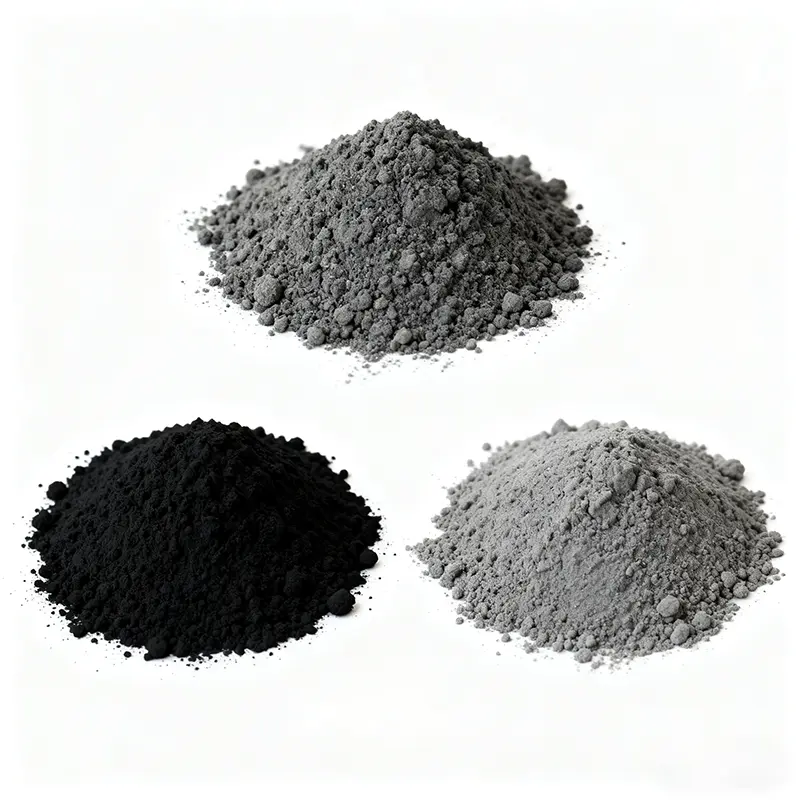
1. First, Understand: Why Are Tungsten Carbide-Based Cemented Carbides "Naturally Wear-Resistant"?
To understand their wear resistance, we first need to start with the material’s inherent properties. The physical characteristics of tungsten carbide itself, combined with the "optimizing effect" of binders, collectively contribute to the high wear resistance of cemented carbide. There are three core reasons:
1.1 Tungsten Carbide Particles: Hardness Is the "Foundation" of Wear Resistance
Pure tungsten carbide (WC) is one of the hardest substances in nature:
- Its Mohs hardness reaches 9.0 (second only to diamond’s 10.0), enabling it to resist scratching from most non-metallic and metallic materials (such as quartz in ores and steel in metal processing).
- At room temperature, its Rockwell A hardness (HRA) ranges from 89 to 93, far higher than that of ordinary steel (HRA 50-60) and ceramics (HRA 80-85). The higher the hardness, the harder it is for the material’s surface to be "worn away," resulting in slower wear rates.
1.2 Binders: Balance Hardness and Toughness to Avoid "Brittle Fracture Wear"
Pure tungsten carbide has high hardness but poor toughness, making it prone to cracking if used directly. In industry, binders such as cobalt (Co) and nickel (Ni) (typically 6%-15% content) are added to "bond" tungsten carbide particles into a solid form:
- Binders can absorb external impacts, preventing cemented carbide from cracking due to vibration during friction (e.g., mining tools encountering hard rock will not break like ceramics).
- A reasonable binder content (e.g., 8%-10% Co) strikes a balance between "high hardness" and "sufficient toughness"—ensuring wear resistance while adapting to complex working conditions and avoiding "abnormal wear caused by brittle fracture."
1.3 Sintering Process: Density Determines "Wear Resistance Stability"
High-quality cemented carbide undergoes a "powder mixing - compression molding - high-temperature sintering" process. The higher the density of the sintered product (usually ≥14.5g/cm³), the more stable its wear resistance:
- High density means tungsten carbide particles are arranged more tightly with fewer gaps, reducing the risk of "particle detachment" during friction (detached particles act like sandpaper, accelerating wear).
- If the sintered density is low (<14.0g/cm³), the material will have internal pores. During friction, these pores easily expand, reducing overall wear resistance by more than 30%.
2. 3 Key Factors Affecting the Wear Resistance of Tungsten Carbide-Based Cemented Carbide
Even for tungsten carbide-based cemented carbide, wear resistance varies due to differences in "composition ratios" and "process details"—this is also the core reason for product differences across the four countries. The specific factors are as follows:
2.1 Tungsten Carbide Grain Size: Fine Grains for Better Wear Resistance, Coarse Grains for Better Impact Resistance
The size (grain size) of tungsten carbide particles directly affects wear resistance:
- Fine grains (1-3μm): Small particle size and high quantity result in a denser material surface after sintering. HRA hardness can reach 91-93, and wear resistance is 20%-30% higher than that of coarse grains. Suitable for light-load, high-frequency friction scenarios (e.g., cutting tools for electronic components).
- Medium grains (3-5μm): Balance wear resistance and toughness, with HRA hardness of 88-90. The first choice for general-purpose scenarios (e.g., ordinary lathe tools, corrugated paper slitting knives).
- Coarse grains (5-8μm): Large particle size and good toughness, with HRA hardness of 85-88. Wear resistance is slightly lower, but it can withstand impacts (e.g., mining drill bits, crusher hammers), avoiding rapid wear caused by impact-induced cracking.
2.2 Binder Content: Lower Content = Higher Wear Resistance (When Toughness Is Sufficient)
On the premise of ensuring no cracking, the content of binders (taking cobalt as an example) has an "inverse relationship" with wear resistance:
- Low cobalt content (6%-8%): High proportion of tungsten carbide particles, high hardness, and strong wear resistance. Suitable for low-impact scenarios (e.g., precision grinding tools).
- Medium cobalt content (8%-12%): General-purpose ratio, balancing wear resistance and toughness. Suitable for most industrial scenarios (e.g., cutting tools for auto parts).
- High cobalt content (12%-15%): Good toughness and impact resistance, but slightly reduced wear resistance. Suitable for high-impact scenarios (e.g., spools for high-pressure hydraulic valves).
2.3 Surface Treatment: Enhancing the "Wear-Resistant Protective Layer"
Some high-end cemented carbide products undergo surface treatment to further improve wear resistance:
- Titanium nitride (TiN) coating: Surface hardness increases to HRA 95 or above, with high smoothness and reduced friction coefficient. Suitable for high-speed cutting (e.g., precision tools from Germany).
- Diamond-like carbon (DLC) coating: Friction coefficient <0.1, and wear resistance is 50% higher than that of uncoated products. Suitable for oil-free lubrication scenarios such as food and medical industries (e.g., precision bearings from Japan).
3. Comparison of Wear Resistance of Tungsten Carbide-Based Cemented Carbide Across China, Germany, the U.S., and Japan
Due to different industrial demands, the "wear resistance focus" and "applicable scenarios" of products from the four countries vary significantly. The detailed comparison (including representative brands, core features, and typical applications) is shown in the table below:
| Country | Representative Brands | Product Features (Related to Wear Resistance) | Key Indicators (General-Purpose Products) | Typical Application Scenarios | Advantages & Considerations |
|---|---|---|---|---|---|
| China | Zhuzhou Cemented Carbide, Zigong Cemented Carbide | Dominated by medium grains (3-5μm), 8%-10% Co content, high cost-effectiveness | HRA 88-90, Density 14.5-14.8g/cm³ | General tools (woodworking knives, paper slitting knives), mining tools | Suitable for bulk, medium-low load scenarios; stable wear resistance and affordable price. High-end fine-grain products require customization. |
| Germany | Sandvik (Germany), Kennametal (Germany) | Dominated by fine grains (1-3μm), high sintered density (≥14.8g/cm³), mature surface treatment | HRA 91-92, Wear rate 15% lower than Chinese products | Precision cutting tools (auto engine part knives), high-end abrasives | Stable wear resistance; suitable for high-speed, high-precision scenarios. Price is 2-3 times that of Chinese products. |
| U.S. | Kennametal (Headquarters), Carpenter | High customization; available in coarse-grain high-Co (12%-15% Co) or fine-grain low-Co products for extreme conditions | HRA 85-93 (adjustable on demand), strong impact wear resistance | Mining drill bits (hard rock mining), aerospace cutting tools | Suitable for extreme scenarios (high pressure, high temperature); balances wear resistance and toughness. Long delivery time (8-12 weeks). |
| Japan | Sumitomo Electric, Mitsubishi Materials | Ultra-fine grains (<2μm), precision processing, suitable for light-load high-frequency friction | HRA 92-93, Surface roughness Ra ≤0.1μm | Electronic component knives (lithium battery electrode slitting), precision bearings | Extremely high wear resistance; suitable for precision light-load scenarios. Weak impact resistance; not suitable for rough scenarios like mining. |
4. How to Select High-Wear-Resistant Tungsten Carbide-Based Cemented Carbide Products?
When selecting products, there is no need to blindly pursue "maximum hardness" or "imported brands." Instead, match products to "practical working conditions" by following these 3 steps:
4.1 Clarify Working Conditions: First Determine "Wear Type" and "Load Level"
- Light-load, high-frequency friction (e.g., paper slitting, electronic component cutting): Choose fine-grain, low-Co products (HRA 90-92); prioritize brands from Japan or Germany.
- Medium-load, general-purpose scenarios (e.g., ordinary metal cutting, woodworking): Choose medium-grain, medium-Co products (HRA 88-90); Chinese brands offer the best cost-effectiveness.
- High-load, impact-prone scenarios (e.g., mining, crushing): Choose coarse-grain, high-Co products (HRA 85-88); customized products from the U.S. or China are more suitable.
4.2 Check Key Indicators: 3 Parameters to Quickly Evaluate Wear Resistance
- HRA Hardness: Prioritize products with HRA ≥88 (products with HRA <85 have poor wear resistance and are not recommended for high-frequency friction).
- Sintered Density: ≥14.5g/cm³ (low-density products wear easily; ask manufacturers for density test reports).
- Tungsten Carbide Grain Size: Select based on working conditions (fine grains for wear resistance, coarse grains for impact resistance). Avoid using coarse-grain products for precision cutting (insufficient wear resistance) or fine-grain products for mining (prone to cracking).
4.3 Small-Batch Testing: Avoid "Bulk Purchase Risks"
For critical scenarios (e.g., production line tools), purchase 10-20 samples for testing first:
- Record the "continuous service time" of samples (e.g., how many meters of paper a slitting knife can cut).
- Observe wear conditions (e.g., whether the edge wears evenly, and if there is cracking or particle detachment).
- Compare the "unit wear cost" of different brands (total purchase cost ÷ service life) instead of just looking at unit price.
5. Common Misconceptions: 2 Wrong Views About the Wear Resistance of Tungsten Carbide-Based Cemented Carbide
Misconception 1: "Higher Hardness = Better Wear Resistance"
Fact: Hardness is only the "foundation" of wear resistance. If toughness is insufficient, high-hardness products are prone to cracking, leading to "abnormal wear." For example, using a fine-grain product with HRA 93 as a mining drill bit will cause it to crack immediately when encountering hard rock, resulting in a service life 50% shorter than that of a coarse-grain product with HRA 88.
Misconception 2: "Imported Products Are Definitely More Wear-Resistant Than Domestic Ones"
Fact: Imported products have advantages in fine-grain and precision processes, but the wear resistance of domestic medium-grain general-purpose products can meet most scenarios (e.g., the wear resistance of China’s YG8 product is only 10% lower than that of Germany’s K20 product, but the price is 60% lower). Blindly choosing imported products will increase costs unnecessarily.
Conclusion: Tungsten Carbide-Based Cemented Carbide Is "Wear-Resistant," but Selection Should Be "Need-Based"
Tungsten carbide-based cemented carbide is indeed an industrial-grade high-wear-resistant material, but its wear resistance is not "one-size-fits-all"—fine-grain products are suitable for precision wear resistance, while coarse-grain products are suitable for impact-resistant wear resistance. Products from China, Germany, the U.S., and Japan each have their own focuses: China’s general-purpose products, Germany’s precision products, the U.S.’s extreme-condition products, and Japan’s ultra-fine precision products, each corresponding to different needs.
As a professional in the tungsten carbide industry, we recommend: When selecting products, first clarify "working condition requirements," then match "grain size, cobalt content, and processes," and finally verify through small-batch testing to select products that are "wear-resistant and cost-effective."
If your production scenario faces issues such as "insufficient wear resistance and frequent replacements," or if you need customized cemented carbide products for special working conditions (e.g., high temperature, high impact), feel free to communicate with us. We can provide sample testing and composition optimization suggestions to help extend your product’s service life.